




DP Diploma Programme
Intensive two-year programme for students aged 16–19. Preparation for admission to the world's best universities.
IB World School
International Baccalaureate
International Talent Academy is an IB World School authorised for the Diploma Programme (DP).
IB World Schools share a common philosophy—a commitment to improve the teaching and learning of a diverse and inclusive community of students through challenging, high-quality programmes of international education that share a powerful vision.
The DP community in a global world
To date, more than 1.2 million people have completed the DP worldwide. IB students have diverse experiences and perspectives, attend IB schools in 147 countries and represent an even greater number of nationalities. www.ibo.org

DP
Overview of the IB Diploma Programme
The Diploma Programme (DP) is a two-year international education programme that prepares students aged 16–19 for university and higher education. It also teaches them to think critically and solve problems creatively throughout their lives, equipping them with the skills needed to succeed in a rapidly changing and increasingly global society.
The DP offers a holistic approach to teaching and learning with an emphasis on intercultural understanding. Young people learn to understand the world around them through inquiry, critical thinking and a broad perspective.
© International Baccalaureate Organization 2018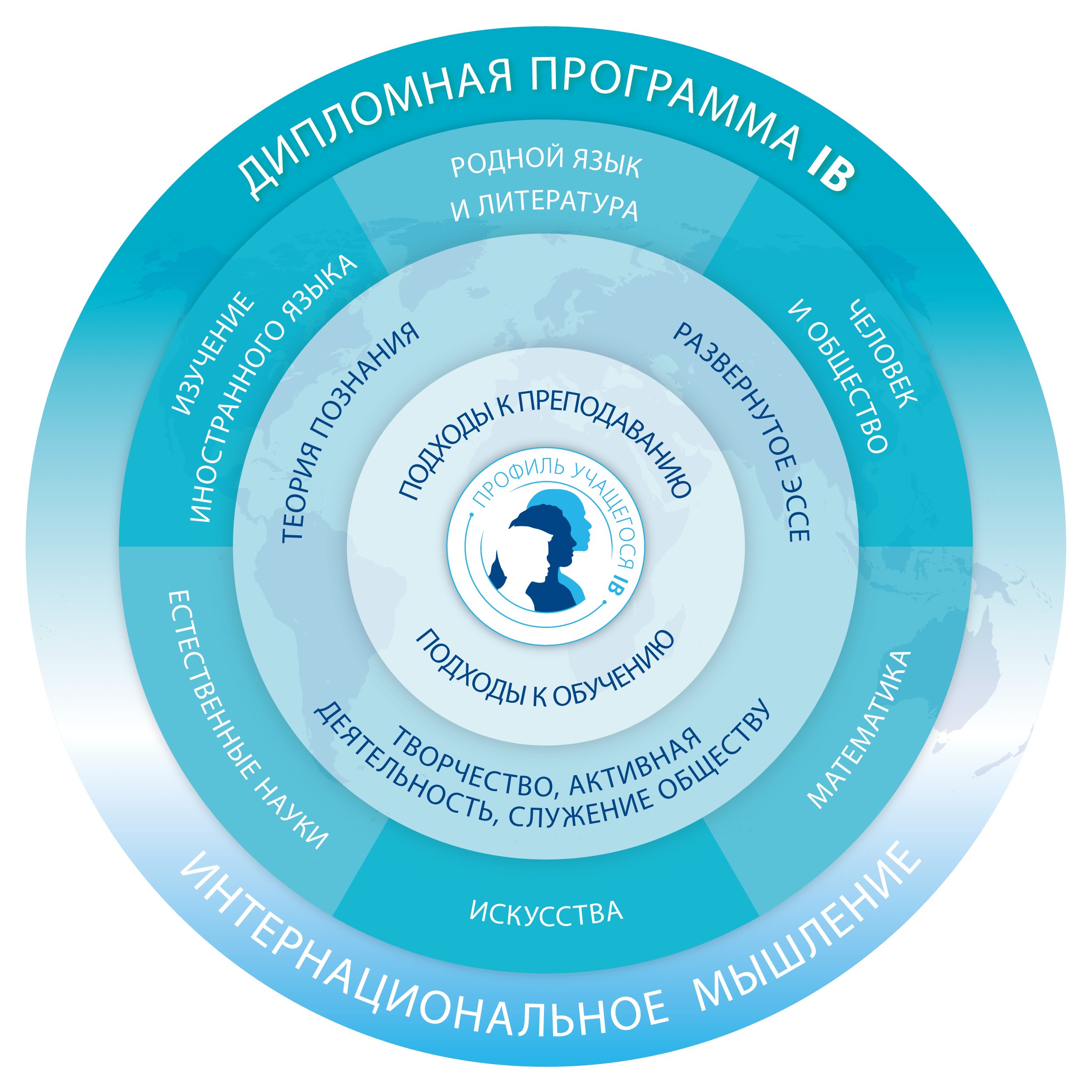
IB Learner Profile
Qualities that the IB programme develops in every student
-

Balanced
We understand the importance of balancing different aspects of our lives—intellectual, physical, and emotional—to achieve well-being for ourselves and others. We recognize our interdependence with other people and with the world in which we live.
-

Reflective
We thoughtfully consider the world and our own ideas and experience. We work to understand our strengths and weaknesses in order to support our learning and personal development.
-

Inquirers
We nurture our curiosity, developing skills for inquiry and research. We know how to learn independently and with others. We learn with enthusiasm and sustain our love of learning throughout life.
-

Knowledgeable
We develop and use conceptual understanding, exploring knowledge across a range of disciplines. We engage with issues and ideas that have local and global significance.
-

Thinkers
We use critical and creative thinking skills to analyse and take responsible action on complex problems. We exercise initiative in making reasoned, ethical decisions.
-

Caring
We show empathy, compassion and respect. We have a commitment to service, and we act to make a positive difference in the lives of others and in the world around us.
-

Open-minded
We critically appreciate our own cultures and personal histories, as well as the values and traditions of others. We seek and evaluate a range of points of view, and we are willing to grow from the experience.
-

Risk-takers
We approach uncertainty with forethought and determination; we work independently and cooperatively to explore new ideas and innovative strategies. We are resourceful and resilient in the face of challenges and change.
-

Communicators
We express ourselves confidently and creatively in more than one language and in many ways. We collaborate effectively, listening carefully to the perspectives of other individuals and groups.
-

Principled
We act with integrity and honesty, with a strong sense of fairness and justice, and with respect for the dignity and rights of people everywhere. We take responsibility for our actions and their consequences.
DP teaching is based on 6 subject groups

Language and literature

Individuals and societies

Mathematics

Arts

Sciences
Why choose the Diploma Programme?
Parents who want the very best education for their children choose the DP because it offers:
-
A challenging academic programme that is excellent preparation for university study and higher education.
-
A learner-centred approach to teaching that supports intellectual, emotional, physical and social development—rather than focusing solely on test preparation.
-
A focus on international-mindedness, compassion and understanding of intercultural differences.
-
A recognised, rigorous and widely respected academic preparation. Universities regularly refer to DP graduates as among the best prepared for higher education.
-
DP graduates succeed at university and often begin their studies directly with more advanced courses.
Our curriculum
At our school, students choose subjects from the list we offer, organised by level:
Higher Level
Standard Level
Students study three subjects at Higher Level (HL) and three at Standard Level (SL). HL and SL differ in scope but are assessed against the same assessment criteria; at HL, students are expected to demonstrate a greater breadth of knowledge, understanding and skills (ibo.org).
Subjects we offer
Group 1
Russian language and literature (HL/SL)
Group 2
English B (HL)
Group 3
History (HL/SL), Digital society (HL/SL), Business management (HL/SL)
Group 4
Biology (HL/SL), Chemistry (HL/SL), Physics (HL/SL)
Group 5
Mathematics: Applications and interpretation (HL/SL)
Group 6
The arts (HL/SL)
Theory of knowledge
Encourages students to reflect on the nature of knowledge and on how we know what we claim to know.
Extended essay
Introduces the demands and rewards of independent work before university and independent research in a field of interest.
Creativity, activity, service
Experiential learning through a wide range of activities beyond the classroom, including service and sport.
Strengths of assessment in the DP
The IB aims to assess essential thinking skills through carefully designed tasks that give students the opportunity to demonstrate their understanding of each subject—not only their ability to memorise information.
The IB recognises the importance of examination results for university admission and employment, and upholds an international standard that retains its value and relevance over many years.
The long-standing tradition of rigorous assessment built into the IB Diploma Programme includes a range of examinations and school-based assessments that give every student the opportunity to have their strengths recognised—including credit where appropriate.